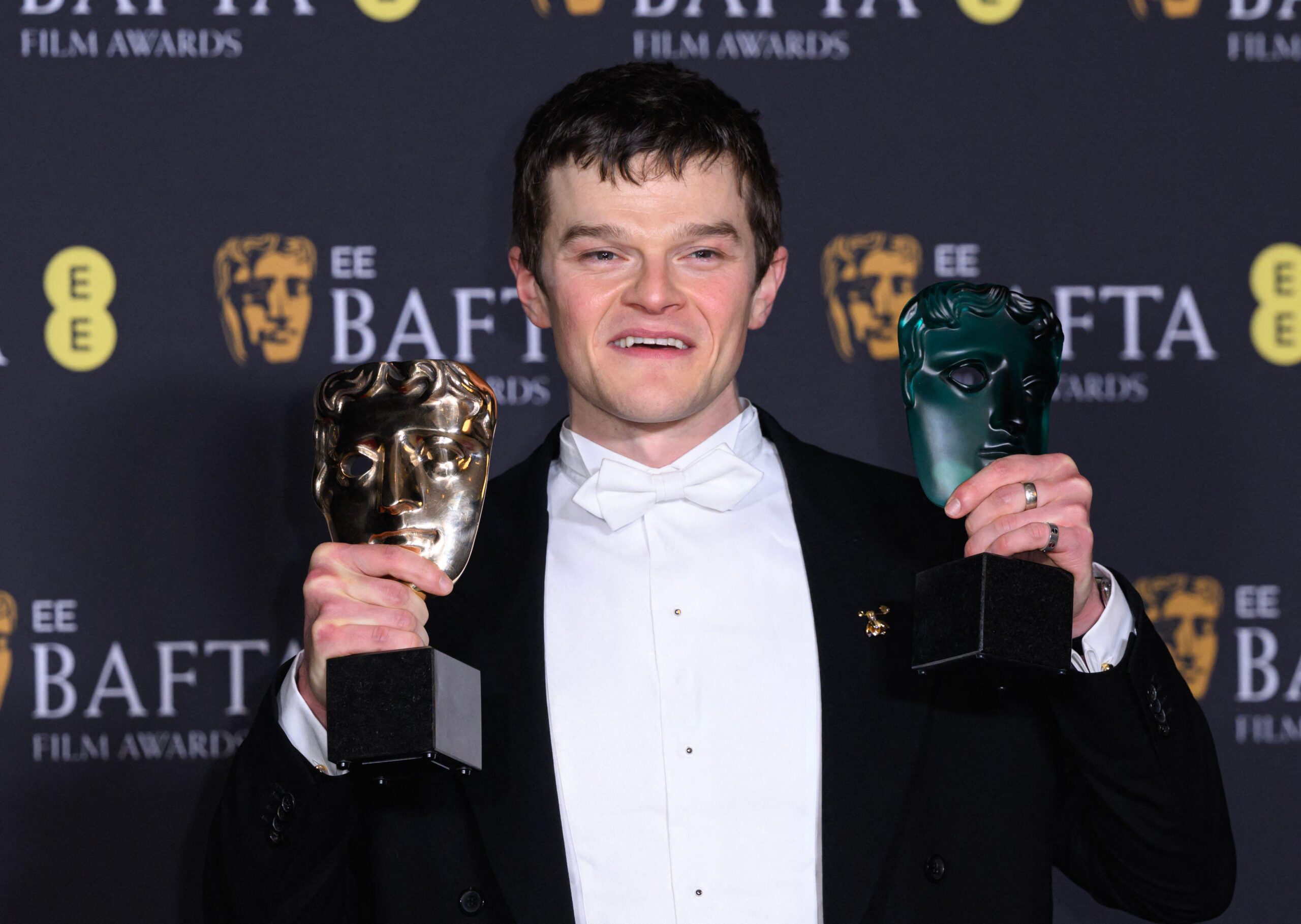
The British Academy of Film and Television Arts (BAFTA) has once again spotlighted excellence in behind-the-scenes storytelling, and few series have walked away with more prestige than Adolescence. At the 2026 BAFTA Craft Awards, the Netflix drama clinched two major accolades—Best Photography & Lighting: Fiction and Best Original Music—reinforcing its dominance not just in viewership, but in technical mastery.
While buzz swirled around buzzy newcomers and high-profile biopics, Adolescence reminded the industry why sustained quality outshines spectacle. Its quiet, emotionally resonant storytelling, paired with groundbreaking visual and sonic design, proved irresistible to the craft voters.
Joining it on the winners’ list was the enigmatic true-crime docuseries Celebrity Traitors, which took home Best Editing: Factual. But it was Adolescence that stole the narrative—its continued success raising questions about how a teen-centric drama has so thoroughly captivated both audiences and critics alike.
The Unstoppable Rise of Adolescence
Adolescence didn’t burst onto the scene with fanfare. When it premiered in late 2023, it was one of dozens of coming-of-age dramas vying for attention in a crowded streaming landscape. But unlike its peers—many reliant on nostalgia or melodrama—Adolescence opted for restraint. No voiceovers, no montages set to indie rock anthems. Instead, it leaned into silence, lingering shots, and a color palette that shifted subtly with each character’s emotional arc.
By Season 3, it had become a cultural touchstone. Critics praised its unflinching portrayal of teenage mental health, identity formation, and the often-invisible pressures of modern adolescence. But awards attention didn’t fully arrive until the BAFTA Craft nominations dropped in early 2026—six nods across cinematography, sound, music, editing, production design, and casting.
Two wins may sound modest, but in a category-heavy competition where prestige epics like The Hollow Crown and Edge of the World were expected to dominate, Adolescence’s double victory speaks volumes.
Why the Craft Community Embraced Adolescence
Craft awards reward the invisible: the work audiences rarely notice unless it’s missing. Adolescence thrives in that space.
Take its cinematography. The series uses natural light almost exclusively—overcast Scottish skies, dimly lit bedrooms, the fluorescent glare of school hallways. DP Elise Travers has spoken about avoiding digital enhancement, opting instead for 16mm film scans upscaled in post. The result? A tactile, almost documentary-like texture that grounds the show’s emotional peaks.
In the episode “October Light,” a pivotal breakup unfolds across 14 minutes with only two camera movements. The stillness forces viewers into the characters’ discomfort—a technique that earned Travers the Best Photography & Lighting award.
Then there’s the score. Composer Moira Lane rejected traditional orchestration in favor of modular synth patches layered with field recordings: the hum of a school radiator, the click of a bike chain, the muffled shout through a bedroom door. These ambient textures form the emotional backbone of the series. Her piece “Static Embrace,” played during the Season 3 finale, was cited by the BAFTA jury as “a masterclass in emotional minimalism.”
Behind the Music: How Sound Shapes Story in Adolescence
Few dramas treat music as narrative architecture. Adolescence does.
The show’s score isn’t background—it’s a character. In Season 2, protagonist Jamie begins to dissociate during stressful moments. The soundtrack responds: familiar motifs distort, pitch-shift downward, or cut out entirely, replaced by low-frequency drones. This isn’t just artistic flair; it’s an auditory representation of mental withdrawal.
For the BAFTA-winning cue “Frayed,” Lane used a broken tape loop from a 1980s answering machine, feeding it through a granular synthesizer. The result is a haunting, glitchy melody that mirrors Jamie’s fractured sense of self.
This level of intentionality is why the music award wasn’t a surprise—it was an inevitability.
“We didn’t want the music to tell people how to feel,” Lane said in a post-ceremony interview. “We wanted it to make them feel—without knowing why.”
Celebrity Traitors: The Dark Horse That Broke Through
While Adolescence dominated headlines, Celebrity Traitors emerged as the night’s most compelling underdog. The true-crime series, which investigates high-profile cases of betrayal within celebrity circles—from embezzlement to espionage—won Best Editing: Factual, a category known for rewarding narrative precision.
The win highlights a shift in how documentary storytelling is judged. Rather than just assembling footage, the editors of Celebrity Traitors constructed a psychological narrative, using pacing, juxtaposition, and audio layering to build suspense.
In the episode “The Agent Who Sold Secrets,” the editing team intercuts a 1990s press conference with declassified MI5 transcripts, slowly revealing the subject’s duplicity. The sequence, which unfolds in near silence for six minutes, was described by a BAFTA judge as “edits that breathe like a thriller.”
It’s a reminder that craft excellence isn’t genre-bound. Whether fiction or factual, execution is everything.
What These Wins Reveal About Modern TV Priorities
The 2026 BAFTA Craft Awards didn’t just honor individual achievements—they signaled broader industry values.
Adolescence’s success proves that intimate, character-driven storytelling can compete with big-budget spectacles when technical craftsmanship is prioritized. It also reflects a growing appreciation for subtlety in visual and sonic design—where less is more, and restraint is strength.
Meanwhile, Celebrity Traitors’ win underscores the rise of narrative nonfiction. Audiences no longer want just facts; they want experience. The best factual editing today isn’t about clarity alone—it’s about rhythm, tension, and revelation.
Both winners also share something crucial: they reject algorithmic formulas. No cliffhangers every 12 minutes. No “bingeable” pacing. They trust viewers to sit with discomfort, ambiguity, and silence. That confidence is increasingly rare—and increasingly rewarded.
Common Pitfalls Other Dramas Fall Into—And How Adolescence Avoids Them
Many teen dramas fail not because of bad writing, but because of overproduction. Here’s how Adolescence sidesteps the traps:

- Overlighting: Most teen shows look like commercials—bright, airbrushed, unreal. Adolescence embraces shadows, imperfections, and off-center framing.
- Formulaic scoring: Too many series rely on trending indie tracks or predictable piano motifs. Adolescence builds its own sonic language.
- Editing for pace, not emotion: Quick cuts sell tension, but they erode intimacy. Adolescence lingers—sometimes uncomfortably so—because real emotional change isn’t fast.
- Casting for familiarity: The show avoids recognizable faces, opting instead for unknowns discovered through open auditions. This forces audiences to engage with characters, not celebrities.
These choices aren’t just stylistic—they’re philosophical. They reflect a belief that authenticity trumps appeal.
The Ripple Effect: What These Wins Mean for Netflix and Beyond
Netflix has long struggled to shake the perception that its dramas are disposable—high on views, low on prestige. Adolescence challenges that narrative.
With two BAFTA Craft Awards, the series joins an elite tier of streaming originals that have earned critical legitimacy. It may not have the global name recognition of The Crown, but within the industry, its wins carry weight.
Expect ripple effects:
- Increased investment in character-driven, low-volume dramas
- More emphasis on music and cinematography in development briefs
- A shift toward hiring composers and DPs with indie or experimental backgrounds
Other streamers are already taking note. Amazon has fast-tracked a similar project, Interior, focusing on teenage girls in rural Wales, with a directive to “prioritize craft over casting.”
A Closing Thought: Excellence Is Earned in the Details
The BAFTA Craft Awards don’t celebrate stars or ratings. They honor the quiet labor—the late nights in edit suites, the calibration of lenses, the thousands of tiny decisions that shape how a story feels.
Adolescence didn’t win because it’s popular. It won because every frame, every note, every second of silence was deliberate.
In an era of content overload, craft is the differentiator. And in 2026, Adolescence proved that when technique and truth collide, awards follow.
For creators, the lesson is clear: don’t chase virality. Chase mastery.
FAQs
Was Adolescence nominated for any other BAFTA Craft Awards? Yes—it received six nominations total, including Best Sound: Fiction, Best Editing: Drama, and Best Production Design.
What episode of Adolescence won for cinematography? The award-winning work spanned the entire third season, but the episode “October Light” was specifically cited by the jury.
Who composed the music for Adolescence? Moira Lane, an experimental composer known for her work in immersive theater and sound installations.
Did Celebrity Traitors win any other awards besides editing? No, though it was nominated for Best Factual Sound and Best Research.
Is Adolescence likely to win at the main BAFTA TV Awards? Given its craft dominance, industry buzz suggests strong chances for Best Drama Series and Best Actress (Ellie Nairn).
Where can I watch the BAFTA Craft Awards highlights? Clips and acceptance speeches are available on BAFTA’s official YouTube channel and BBC iPlayer.
Will there be a Season 4 of Adolescence? Netflix has confirmed renewal, with production expected to begin in late 2026.
FAQ
What should you look for in BAFTA Craft Awards Winners: Adolescence Dominates with Two Major Wins? Focus on relevance, practical value, and how well the solution matches real user intent.
Is BAFTA Craft Awards Winners: Adolescence Dominates with Two Major Wins suitable for beginners? That depends on the workflow, but a clear step-by-step approach usually makes it easier to start.
How do you compare options around BAFTA Craft Awards Winners: Adolescence Dominates with Two Major Wins? Compare features, trust signals, limitations, pricing, and ease of implementation.
What mistakes should you avoid? Avoid generic choices, weak validation, and decisions based only on marketing claims.
What is the next best step? Shortlist the most relevant options, validate them quickly, and refine from real-world results.