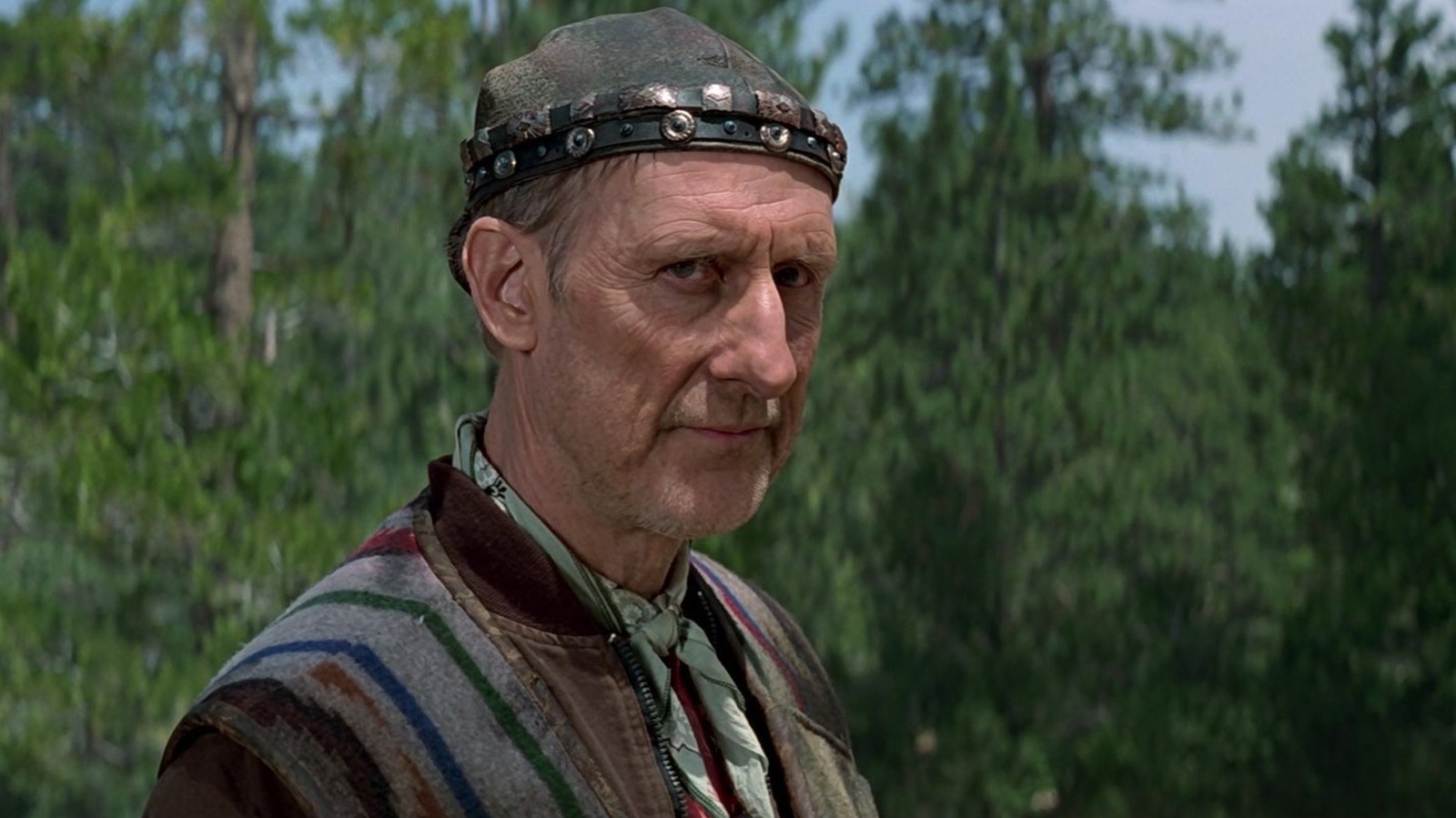
When audiences watched Star Trek: First Contact, few realized one of the film’s pivotal actors wasn’t just playing a scientist—they were drawing from decades of actual research into extraterrestrial intelligence. This isn’t science fiction blurring into reality. It’s reality infiltrating science fiction in one of the most compelling crossovers in cinematic history.
The actor in question? Dr. James Cromwell. While best known for his Oscar-nominated role in Babe or his Emmy-winning turn on Murder One, Cromwell’s portrayal of Zefram Cochrane—the reluctant visionary behind humanity’s first warp flight—was shaped by something deeper than script analysis. It was informed by his long-standing engagement with extraterrestrial studies, scientific ethics, and the philosophical implications of first contact.
But why does this matter? Because First Contact isn’t just a sequel. It’s a film deeply rooted in the idea that humanity’s leap into interstellar civilization hinges not on technology alone—but on mindset. And having an actor who had studied that very mindset, outside the studio system, added a layer of gravitas few realized was there.
James Cromwell: Actor, Advocate, and SETI-Aligned Thinker
Cromwell’s involvement with extraterrestrial research isn’t the stuff of tabloid speculation. It’s documented, consistent, and intellectually grounded. Long before stepping onto the Phoenix set, he was attending lectures at the SETI Institute, engaging with astrophysicists, and advocating for the ethical frameworks that should guide humanity’s search for life beyond Earth.
His interest wasn’t performative. It was personal.
In interviews dating back to the early 2000s, Cromwell spoke about attending events hosted by the SETI Institute—where scientists use radio telescopes to scan the cosmos for intelligent signals. He didn’t just show up for photo ops. He participated in panels, asked probing questions, and challenged assumptions about anthropocentrism in alien contact scenarios.
“If we ever do make contact,” he once said, “it won’t be because we found them. It’ll be because they allowed us to.”
This perspective—humility in the face of the unknown—mirrors Zefram Cochrane’s arc almost exactly. Cochrane begins as a cynical, post-apocalyptic engineer, drinking away his trauma. By the film’s end, he’s the reluctant hero who ignites humanity’s future by launching the Phoenix. Cromwell didn’t act his way into that transformation—he embodied it, drawing from real-world debates about discovery, responsibility, and cosmic humility.
Why Authenticity Matters in Sci-Fi Casting
Hollywood has long leaned on “typecasting” scientists as either mad geniuses or robotic nerds. But First Contact took a different path. By casting an actor with genuine intellectual investment in extraterrestrial studies, the film gained a subtle authenticity that elevated its philosophical core.
Consider this: most actors playing scientists undergo a crash course in jargon. Cromwell came in fluent in the ethics.
- He understood the Drake Equation not as a prop, but as a probabilistic framework.
- He grasped the Fermi Paradox not as a plot device, but as an existential riddle.
- He treated first contact not as an action set piece, but as a civilization-level inflection point.
This depth translated on screen. Watch Cochrane’s reaction when he first sees the Vulcans. It’s not awe. It’s disbelief, fear, and a dawning awareness of responsibility. Cromwell’s performance doesn’t shout—it resonates.

Contrast this with typical sci-fi portrayals where scientists gape at monitors and say, “That’s impossible!” Cochrane doesn’t say that. He says, “They’re here, aren’t they?”—a line delivered with the weight of someone who’s spent years wondering if they’d ever come.
The SETI Connection: Science Informing Storytelling
Cromwell’s engagement with the Search for Extraterrestrial Intelligence (SETI) wasn’t a passing curiosity. He’s credited with helping raise public awareness about SETI’s mission during a time when funding was precarious. In the late 1990s, when NASA pulled back from SETI-related programs, figures like Cromwell used their platforms to argue for continued exploration.
His advocacy wasn’t just about funding telescopes. It was about shifting public perception.
“We’re not just looking for aliens,” he said during a 1998 SETI symposium. “We’re looking for perspective. A new way of seeing ourselves.”
That sentiment is baked into First Contact. The Borg represent a dystopian version of unity—assimilation without consent. The Vulcans, in contrast, represent enlightened contact—arrival without domination. The film’s central tension isn’t just survival. It’s how humanity chooses to evolve.
Cromwell’s real-life work with SETI-aligned organizations gave him insight into how such decisions might unfold. Should we broadcast our location? Who speaks for Earth? What if first contact isn’t with beings like us, but with machine intelligence or non-corporeal entities?
These aren’t just script questions. They’re active debates in astrobiology circles. And Cromwell walked into the First Contact production already immersed in them.
Behind the Scenes: How Science Shaped a Performance
Director Jonathan Frakes has spoken openly about casting decisions for First Contact. While Patrick Stewart and Brent Spiner brought gravitas, and Alice Krige embodied chilling elegance as the Borg Queen, it was Cromwell who grounded the film’s most human moment: Cochrane’s speech at the warp flight’s conclusion.
“We come in peace.”
Simple words. Monumental implications.
Frakes didn’t ask Cromwell to study Cochrane’s backstory. He asked him to become Cochrane. And Cromwell drew from more than acting technique—he tapped into years of scientific dialogue.
During rehearsals, Cromwell pushed for changes to Cochrane’s dialogue, suggesting lines that reflected a scientist’s skepticism rather than a hero’s bravado. One notable example: the original script had Cochrane saying, “Today, humanity goes where no one has gone before.” Cromwell argued for something less grandiose, more reflective.
The final line? “Today, we become part of something greater than ourselves.”
That shift—from individual triumph to collective awakening—wasn’t just better writing. It was science-informed storytelling.
The Ripple Effect: When Real Research Meets Reel Legacy
Cromwell’s performance didn’t just elevate First Contact. It influenced how subsequent Star Trek projects approached scientific characters.
Compare Cochrane to later figures like Dr. Culber (Star Trek: Discovery) or Hugh Culber (Star Trek: Strange New Worlds). These characters aren’t just professionals—they’re thinkers, ethicists, philosophers. That depth didn’t emerge from nowhere. It grew from a precedent set by actors like Cromwell, who brought real intellectual weight to their roles.
Moreover, First Contact remains a touchstone in science communication. NASA has screened it at outreach events. SETI researchers have cited it as one of the few films that realistically portrays the emotional and social impact of first contact.
And when they discuss Cochrane’s character, they often note: “He doesn’t act like a movie scientist. He acts like someone who’s actually thought about this.”
Why This Casting Choice Still Resonates
Today, as private space ventures race toward Mars and AI accelerates the search for biosignatures, First Contact feels more relevant than ever. We’re not just asking if we’ll find life. We’re asking how we’ll handle it.
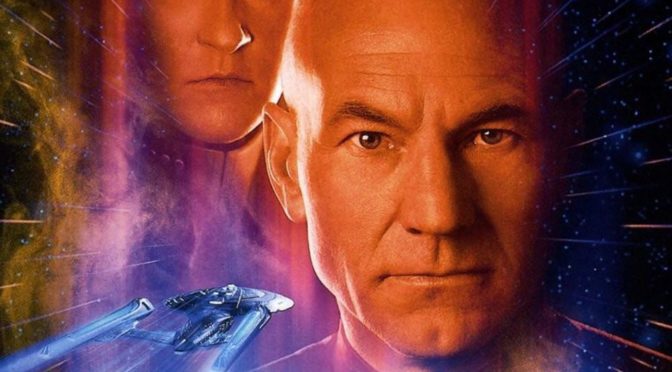
Cromwell’s casting was more than a stunt. It was a statement: that science fiction works best when it’s informed by science fact.
Other franchises have tried similar moves—hiring consultants, bringing in astrophysicists. But few have cast a lead actor whose off-screen intellectual work aligned so closely with their character’s journey.
It’s a model worth replicating. Imagine a climate change thriller starring an IPCC researcher. Or a pandemic drama led by an epidemiologist with field experience. Authenticity isn’t just about accuracy—it’s about emotional truth.
How Filmmakers Can Learn from This Approach
For creators working in sci-fi or speculative genres, Cromwell’s role offers a blueprint:
- Prioritize depth over type: Don’t just cast someone who looks like a scientist. Cast someone who thinks like one.
- Engage with real experts: Invite researchers to consult—not just on jargon, but on worldview.
- Let ethics drive drama: The most compelling sci-fi isn’t about tech. It’s about choices.
- Respect the audience’s intelligence: People can sense when a performance is informed versus invented.
Cromwell didn’t need a crash course in Cochrane’s arc. He’d been living a version of it for years—pondering humanity’s place in the cosmos, questioning our readiness for contact, and advocating for humility in exploration.
That’s not just good acting. It’s lived experience translated to screen.
Final Takeaway: Cast with Conviction, Not Just Credentials
James Cromwell didn’t join Star Trek: First Contact for the paycheck or the franchise prestige. He joined because the story mirrored his own convictions about science, society, and the search for meaning among the stars.
His performance reminds us that the best science fiction doesn’t predict the future. It reflects the present—our hopes, fears, and responsibilities.
Next time you watch First Contact, listen closely when Cochrane speaks. You’re not just hearing a character. You’re hearing a mind shaped by real extraterrestrial studies—proving that sometimes, the most fictional roles are rooted in the deepest truths.
FAQ
Did James Cromwell have a scientific background before acting? No formal degree in science, but he studied philosophy and engaged deeply with scientific communities, particularly SETI, over decades.
Was Zefram Cochrane based on a real person? No, but his character draws inspiration from real scientific pioneers like Robert Goddard and Werner von Braun, as well as ethical debates in astrobiology.
How involved was Cromwell with the SETI Institute? He was a public advocate, attended conferences, and participated in panels, though not a formal researcher or employee.
Did the Star Trek writers know about Cromwell’s interests? Yes—Jonathan Frakes and producer Rick Berman acknowledged that Cromwell’s intellectual depth influenced character development.
Has any other Star Trek actor had a similar background? Not to the same extent, though some, like LeVar Burton, have been strong advocates for science education and literacy.
Does First Contact accurately portray first contact scenarios? It’s one of the more realistic depictions, emphasizing cultural shock, communication, and ethical readiness over combat or spectacle.
Is SETI still active today? Yes—organizations like the SETI Institute continue searching for extraterrestrial intelligence using radio telescopes and optical signaling methods.
FAQ
What should you look for in How a Real-Life Alien Researcher Joined Star Trek First Contact? Focus on relevance, practical value, and how well the solution matches real user intent.
Is How a Real-Life Alien Researcher Joined Star Trek First Contact suitable for beginners? That depends on the workflow, but a clear step-by-step approach usually makes it easier to start.
How do you compare options around How a Real-Life Alien Researcher Joined Star Trek First Contact? Compare features, trust signals, limitations, pricing, and ease of implementation.
What mistakes should you avoid? Avoid generic choices, weak validation, and decisions based only on marketing claims.
What is the next best step? Shortlist the most relevant options, validate them quickly, and refine from real-world results.