
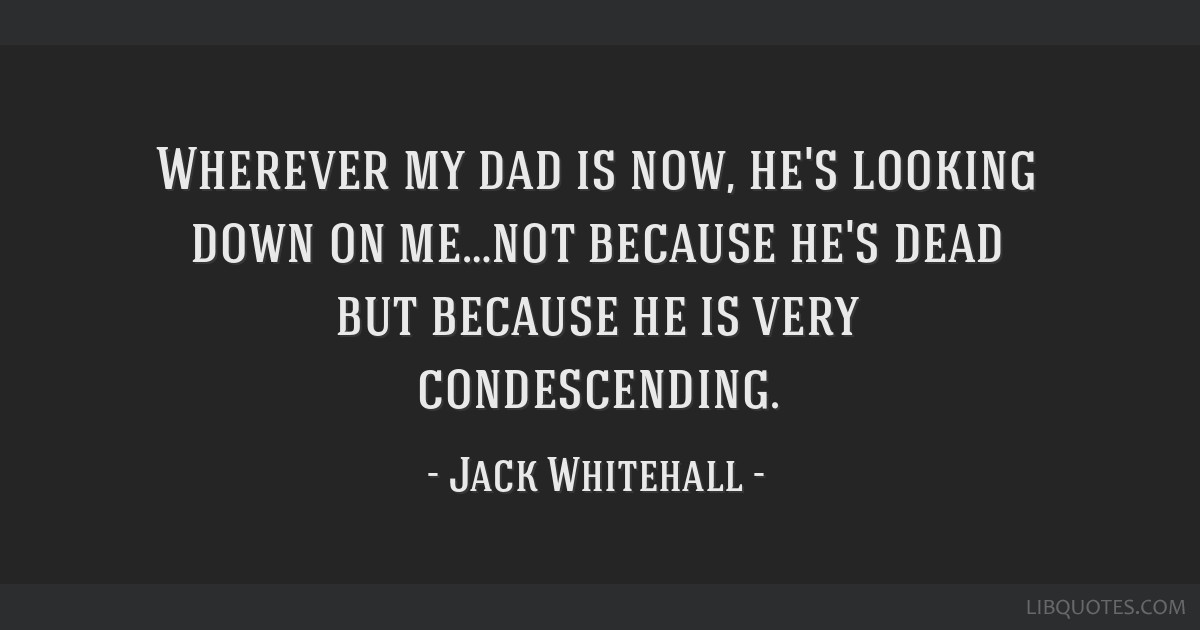
Humor often masks wisdom. Jack Whitehall’s now-iconic line—“I’m sure wherever my dad is, he’s looking down on us. He’s not dead, just very…”—isn’t just a punchline. It’s a cultural mirror. Delivered during one of his stand-up specials, the quote has since gone viral not because it’s shocking, but because it’s true. It captures the absurdity of modern communication, the performative nature of grief, and the polite lies we tell to maintain workplace harmony.
Whitehall, known for his self-deprecating style and sharp observations on class, family, and social awkwardness, uses this quote to do what the best comedy does: reveal uncomfortable truths through laughter.
The Quote in Context: More Than Just a Joke
Whitehall delivers the line in a routine about his father, Michael Whitehall, a former talent agent turned TV personality. The two have co-hosted travel documentaries like Jack Whitehall: Travels with My Father, where their strained-yet-loving dynamic becomes both entertainment and emotional anchor.
The full quote—“I’m sure wherever my dad is, he’s looking down on us. He’s not dead, just very…”—works on multiple levels. On the surface, it’s a parody of the clichéd eulogy phrase “looking down on us.” But beneath the sarcasm lies a commentary on emotional distance, generational disconnect, and the way we use humor to deflect vulnerability.
In the workplace, we’ve all heard versions of this line—polite exaggerations about absentee leaders, passive-aggressive nods to disengaged managers, or jokes about “above us” when no one’s truly leading. Whitehall’s joke resonates because it’s relatable. It’s not about his dad. It’s about our bosses, our parents, our institutions that are present in name only.
Honesty Wrapped in Sarcasm: Why the Quote Stuck
Comedy thrives on honesty. But raw truth is rarely palatable without packaging. Whitehall’s genius lies in disguising critique as self-mockery. When he says his dad is “looking down on us,” he’s not mocking grief—he’s mocking the language of grief when it’s misapplied. The follow-up—“He’s not dead, just very…”—exposes how often we reach for dramatic phrases to describe mundane situations.
This mirrors everyday workplace behavior:
- A manager says, “We’re all in this together,” while delegating every hard task.
- A team member claims, “I’ll circle back,” knowing full well they won’t.
- Executives speak of “transparency” while withholding crucial information.
Whitehall’s quote highlights the gap between what we say and what we mean. And in doing so, it becomes a quiet indictment of dishonest work cultures.
Work Culture Lessons from a Comedian
You don’t expect leadership training from a stand-up routine. But Whitehall’s joke offers four key insights for modern work environments:
#### 1. Presence Isn’t Proximity Being “around” doesn’t mean you’re engaged. Whitehall’s dad is physically present, but emotionally distant—“very…” what? Unavailable? Disapproving? Distracted? That ambiguity is the point. In offices, remote teams, and hybrid setups, physical presence is no longer a proxy for contribution. A leader who’s “looking down” without participating creates disconnection.
Practical takeaway: Measure engagement by contribution, not attendance. A quiet but impactful team member is more valuable than a visible but disengaged manager.
#### 2. Humor as a Coping Mechanism Whitehall uses humor to process his complicated relationship with his father. Similarly, employees use jokes to survive toxic cultures. Sarcastic Slack messages, memes about burnout, or stand-up-style rants in break rooms—are all signs of suppressed stress.
Red flag: When sarcasm becomes the default communication style, it’s a symptom of unaddressed issues.
#### 3. The Danger of Empty Phrases “We’re like a family.” “Let’s touch base.” “I’ve got your back.” These phrases lose meaning when overused. Whitehall mocks the lazy invocation of “looking down on us”—a phrase so overused in eulogies and corporate mission statements that it’s become hollow.
Fix: Replace clichés with specific, honest language. Instead of “We’re all in this,” say “I’ll support you on this project by doing X.”
#### 4. Authenticity Builds Trust Whitehall’s comedy works because it feels real. He doesn’t pretend to have a perfect relationship with his dad. He exposes the awkwardness. In business, leaders who admit uncertainty, show vulnerability, or laugh at themselves build deeper trust than those who project false confidence.
Human Nature and the Comedy of Connection
At its core, Whitehall’s quote is about human connection—or the lack of it. We want to believe someone is watching, guiding, caring. That’s why we say “looking down on us,” even when we don’t believe in an afterlife. It’s a linguistic placeholder for emotional need.
In organizations, this manifests as the desire for mentorship, recognition, and purpose. When those needs go unmet, people invent narratives: “The CEO probably doesn’t know about this,” or “If the founder were here, they’d fix it.”
But real connection doesn’t come from hierarchy. It comes from attention, consistency, and honesty.
Whitehall’s joke reminds us that the people who matter aren’t necessarily the ones “above” us—they’re the ones who show up, listen, and engage. His father may be “very…” something, but at least he’s there. In a world of ghosting, silent treatment, and absentee leadership, that counts for something.
The Power of Understated Truth in Comedy
British comedy, especially in the Whitehall mold, relies on understatement. The bigger the emotion, the quieter the delivery. This contrasts with American stand-up, which often amplifies feelings for effect. Whitehall’s joke works because he delivers a profound observation with a shrug.
This comedic restraint mirrors emotional intelligence in leadership:
- Instead of grand gestures, prioritize small acts of presence.
- Replace dramatic speeches with consistent actions.
- Use humor to diffuse tension, not to avoid accountability.
When a manager says, “I know this project is a mess—let’s figure it out together,” they’re doing what Whitehall does: acknowledging reality with humility and a touch of wit.
Why This Quote Became a Cultural Touchstone
Viral quotes don’t always come from philosophers. Sometimes, they come from comedians who articulate what we’ve all felt but never said. Whitehall’s line spread because:
- It’s short and repeatable – ideal for social media.
- It’s layered – works as a joke, a critique, and a personal reflection.
- It’s relatable across contexts – family, work, friendship.
People quote it at team meetings when a boss is absent. Parents use it when their teenager ignores them. Friends deploy it when someone’s late—again.
Its adaptability is proof of its depth. Like all great comedy, it’s simple on the surface, complex underneath.
Applying the Lesson: From Laughter to Leadership
So what do we do with this?
- Audit your language. Are you using empty phrases to mask disengagement? Replace “I’ll look into it” with “I can’t address this until Friday—here’s why.”
- Embrace awkward honesty. If you don’t know the answer, say so. If a project is failing, name it. Whitehall’s comedy thrives on admitting discomfort—leaders should too.
- Use humor wisely. Jokes that punch up (at systems, not people) build camaraderie. Jokes that punch down erode trust.
- Be present, not just visible. Attend meetings with intent. Respond to messages with care. Don’t just “look down”—step in.
Whitehall’s dad may be “very…” detached, but the comedian keeps trying to connect. That effort—imperfect, persistent, honest—is what matters.
Final Thought: Jack Whitehall’s quote isn’t about death. It’s about life—how we show up (or don’t), how we communicate (or pretend to), and how we use humor to survive the gaps. In work and in life, the people who truly matter aren’t just “looking down.” They’re here, engaged, and willing to say, “I’m not okay… but I’m trying.”
Start there. The rest follows.
FAQ
What is Jack Whitehall’s most famous quote? “I’m sure wherever my dad is, he’s looking down on us. He’s not dead, just very…”—a blend of sarcasm and emotional truth from his stand-up routines.
Is Jack Whitehall’s dad actually alive? Yes, Michael Whitehall is alive and has appeared with Jack in multiple TV shows, including Travels with My Father.
What does “looking down on us” mean in this context? It’s a comedic twist on the common phrase used in memorials, highlighting emotional distance rather than death.
How does Jack Whitehall use humor to address family relationships? He uses self-deprecation and irony to expose truths about generational gaps, emotional restraint, and British reserve.
Can humor improve workplace culture? Yes, when used authentically. Humor can reduce tension and build connection—but only if it doesn’t mask deeper issues.
Why do people quote Jack Whitehall’s line in work settings? It’s a relatable way to comment on absentee leadership or disengaged management without direct confrontation.
What can leaders learn from comedians like Jack Whitehall? That honesty, humility, and timing matter. Sometimes, the best way to address a problem is with a well-placed joke—and a real conversation afterward.
FAQ
What should you look for in Jack Whitehall’s Quote of the Day: A Lesson in Humor and Honesty? Focus on relevance, practical value, and how well the solution matches real user intent.
Is Jack Whitehall’s Quote of the Day: A Lesson in Humor and Honesty suitable for beginners? That depends on the workflow, but a clear step-by-step approach usually makes it easier to start.
How do you compare options around Jack Whitehall’s Quote of the Day: A Lesson in Humor and Honesty? Compare features, trust signals, limitations, pricing, and ease of implementation.
What mistakes should you avoid? Avoid generic choices, weak validation, and decisions based only on marketing claims.
What is the next best step? Shortlist the most relevant options, validate them quickly, and refine from real-world results.