
Jack Whitehall didn’t lose his dad. He just lost him a little—to discretion, distance, or perhaps a particularly long lunch.
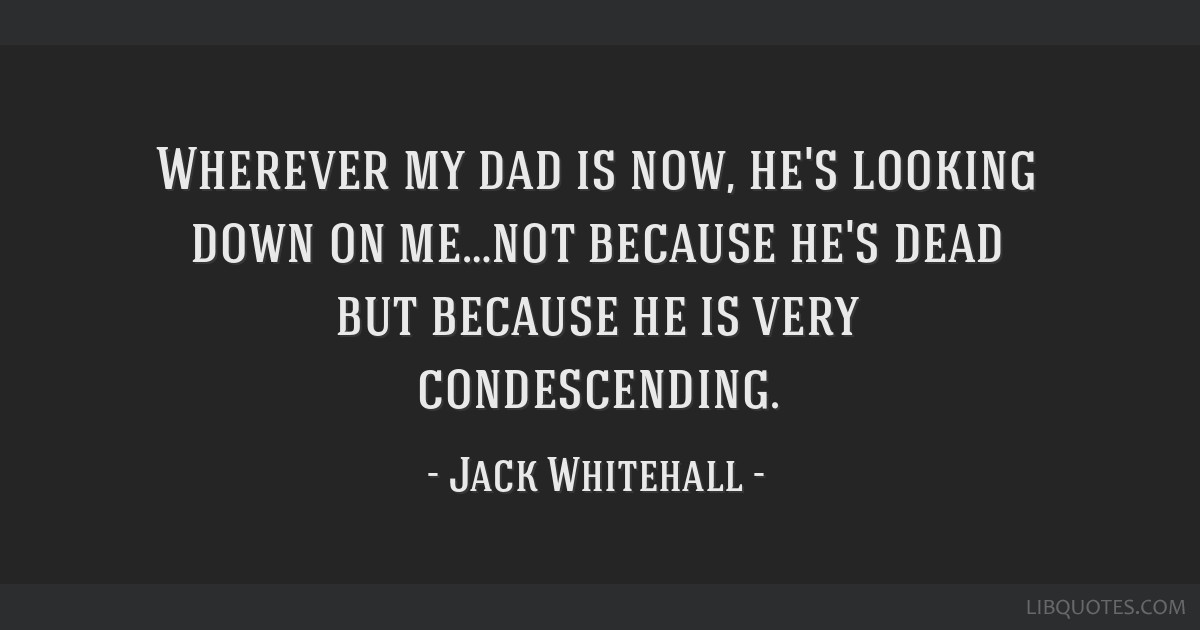
When Whitehall joked, “I’m sure wherever my dad is, he’s looking down on us. He’s not dead—just very,” he wasn’t delivering a eulogy. He was exposing a truth wrapped in deadpan irony: the emotional absences that define modern relationships, workplace dynamics, and personal integrity. This one-liner, now a recurring fixture as the “quote of the day” across social platforms, punches far above its comedic weight. It’s not just funny—it’s diagnostic.
Let’s dissect why this line resonates beyond the laugh, and how it quietly lays bare deeper themes: honesty in personal bonds, the performance of presence in work culture, and the contradictions we all navigate in human nature.
The Quote That Isn’t About Death—But Everything Else
“I’m sure wherever my dad is, he’s looking down on us. He’s not dead—just very.”
On the surface, it’s a perfect British comedown: polite, repressed, and devastatingly funny. But the brilliance lies in the inversion. Instead of invoking grief, Whitehall invokes absence in plain sight. His father is alive, present in body, but emotionally or physically distant—so distant that his son must speculate about his whereabouts like he’s a deity in the ether.
This isn’t dark humor. It’s observational precision.
Whitehall, known for his tight, often cringe-laced dynamic with his father Michael in travel documentaries like Jack Whitehall: Travels with My Father, uses comedy to navigate emotional gaps. The quote reflects a real human condition: being with someone who isn’t really with you.
Real-life example: A manager who attends every meeting but never engages. A partner who scrolls through their phone during dinner. A parent who’s home, but checked out. We’ve all been “looked down on” by the living.
The quote becomes a mirror: How often are we physically present but emotionally absent?
Honesty in Comedy: When Jokes Reveal More Than Confessions
Comedians often say the unsayable. Whitehall does this with upper-class British restraint—his humor thrives on understatement, not outbursts.
This quote works because it’s plausibly deniable. He’s joking, but is he? That duality is where honesty lives.
In real life, we avoid difficult truths. We don’t say, “You’re emotionally checked out”—we joke, “I bet you’re upstairs napping again.” Whitehall’s quote is that instinct, polished.
Why it hits home: - It names emotional detachment without accusation. - It uses humor to soften truth, making it digestible. - It reflects intergenerational communication gaps—especially in cultures that value stoicism over expression.
Workplace parallel: Employees who say, “The boss is great!” while rolling their eyes. The humor masks frustration. Like Whitehall’s line, it’s a coded message: They’re here, but not really leading.
When honesty is too risky, comedy becomes the delivery system.
Work Culture and the Myth of Presence
Whitehall’s joke holds up a mirror to modern work culture—where visibility is often mistaken for value.
We equate: - Being in the office with being productive - Responding fast with being engaged - Attending meetings with being present
But like his dad “looking down on us,” many leaders (and employees) are physically there but mentally absent. They’re checking out while checking in.
| Common workplace scenarios echoing the quote: | |
|---|---|
| -------- | -------- |
| CEO joins a team call but stays on mute the whole time | “Looking down,” not connecting |
| Manager praises remote work but demands office attendance | Inconsistent presence |
| Employees attend meetings but multitask on email | Present in body, absent in mind |
This dissonance erodes trust and psychological safety. Whitehall’s line, applied to work, exposes the theater of involvement—where people perform engagement without substance.
Better alternative: Radical presence. - Leaders who listen more than they speak. - Managers who ask, “How are you really?” and wait for the answer. - Teams that measure output, not office hours.
When we stop pretending to be present, we start being honest—about time, energy, and priorities.
Human Nature: Avoidance, Performance, and the British Stiff Upper Lip
Whitehall’s humor is quintessentially British: repressed, ironic, and deeply self-aware. His quote isn’t just about his dad—it’s about a cultural tendency to avoid.
Avoid conflict. Avoid emotion. Avoid saying what you mean.
This reflects a broader human tendency: we’d rather joke than confront. We’d rather imply than state. We’d rather have someone “looking down on us” than talking to us.
Psychological undercurrents in the quote: - Avoidance coping: Using humor to sidestep emotional discomfort. - Passive communication: Indirectly expressing feelings rather than stating them. - Relational distance: Maintaining emotional space under the guise of politeness.
Real use case: A team member avoids giving feedback to their boss, so they joke, “I’m sure the CEO has better things to do than read my report.” The joke hints at disconnection—but changes nothing.
Whitehall’s line works because it’s relatable. It captures the universal dance between wanting connection and fearing vulnerability.
Comedy as a Lens for Emotional Intelligence
Great comedians are often secret psychologists. Whitehall’s line demonstrates high emotional intelligence—packaging insight into brevity.
Let’s break down the emotional intelligence markers in the quote: - Self-awareness: He sees the dynamic with his dad clearly. - Social awareness: He understands how others perceive absence. - Humor as regulation: He uses comedy to process distance without resentment.
This is a model for navigating difficult relationships—especially familial or hierarchical ones.
- How to apply this in real life:
- Name the gap—with humor or honesty. “I feel like we’re roommates who share a last name.”
- Don’t confuse presence with participation. Being there isn’t enough.
- Use lightness to open heavy conversations. Jokes can be doorways, not walls.
Comedy doesn’t replace conversation—but it can start one.
Why This Quote Keeps Circulating as “Quote of the Day”
Social media loves quotes that are: - Short - Relatable - Layered
Whitehall’s line checks all three. But its staying power comes from multiplicity of meaning. People share it to say: - “My boss is ghosting us.” - “Family dinners are polite but empty.” - “We’re all just pretending to be fine.”
It’s become a cultural shorthand for emotional absenteeism.
Platforms where it thrives: - LinkedIn: Shared with commentary on leadership presence. - Instagram: Paired with father-son photos and ironic captions. - Twitter/X: Used in memes about remote work disconnection.
The quote’s adaptability proves its depth. It’s not just a joke—it’s a social observation with legs.
Turning Absence Into Intentional Presence
So what do we do with this insight?
We can keep joking—or we can act.
Jack Whitehall’s quote isn’t a call to mourn emotional distance. It’s a nudge to notice it.
Actionable steps to close the gap: - In relationships: Replace assumption with inquiry. “Where are you today?” instead of “You’re quiet.” - At work: Measure engagement by contribution, not attendance. - With family: Create rituals that demand presence—no phones, no distractions. - Personally: Audit your own “looking down” moments. When are you physically here but mentally gone?
Honesty doesn’t require drama. Sometimes, it starts with a joke—and ends with a real conversation.
Final Thought: The Best Quotes Tell Us Who We Are
Jack Whitehall’s “quote of the day” endures because it’s not really about his dad.
It’s about us.
It’s about the meetings we zone out of. The texts we ignore. The people we’re with but not with.
Comedy cuts through the noise. It gives us permission to say, “Yeah, that’s me too.” And in that recognition, there’s a chance to change.
Stop just looking down. Start showing up.
FAQ
What does Jack Whitehall mean by “he’s not dead—just very”? It’s a joke about emotional or physical absence—his dad is alive but distant, likely disengaged or elsewhere, making him feel like a distant observer.
Is Jack Whitehall’s relationship with his dad strained? Not strained—complex. Their dynamic is built on comedic tension and British reserve, but their travel series shows growing closeness over time.
Why is this quote so popular on social media? It’s relatable, concise, and layered—people use it to humorously describe disconnection in work, family, and leadership.
How does this quote relate to work culture? It highlights the difference between physical presence and real engagement—a critique of performative leadership and passive participation.
Can humor improve honesty in relationships? Yes, when used well. Humor can soften difficult truths, making them easier to hear and discuss.
What can we learn about human nature from this quote? We often avoid direct communication, using irony or silence to cope with emotional distance—especially in cultures that value restraint.
How can I be more present in my daily life? Practice active listening, limit distractions, and replace assumptions with questions. Small habits build real connection.
FAQ
What should you look for in Jack Whitehall’s Quote of the Day: Humor, Honesty, and Human Truths? Focus on relevance, practical value, and how well the solution matches real user intent.
Is Jack Whitehall’s Quote of the Day: Humor, Honesty, and Human Truths suitable for beginners? That depends on the workflow, but a clear step-by-step approach usually makes it easier to start.
How do you compare options around Jack Whitehall’s Quote of the Day: Humor, Honesty, and Human Truths? Compare features, trust signals, limitations, pricing, and ease of implementation.
What mistakes should you avoid? Avoid generic choices, weak validation, and decisions based only on marketing claims.
What is the next best step? Shortlist the most relevant options, validate them quickly, and refine from real-world results.