
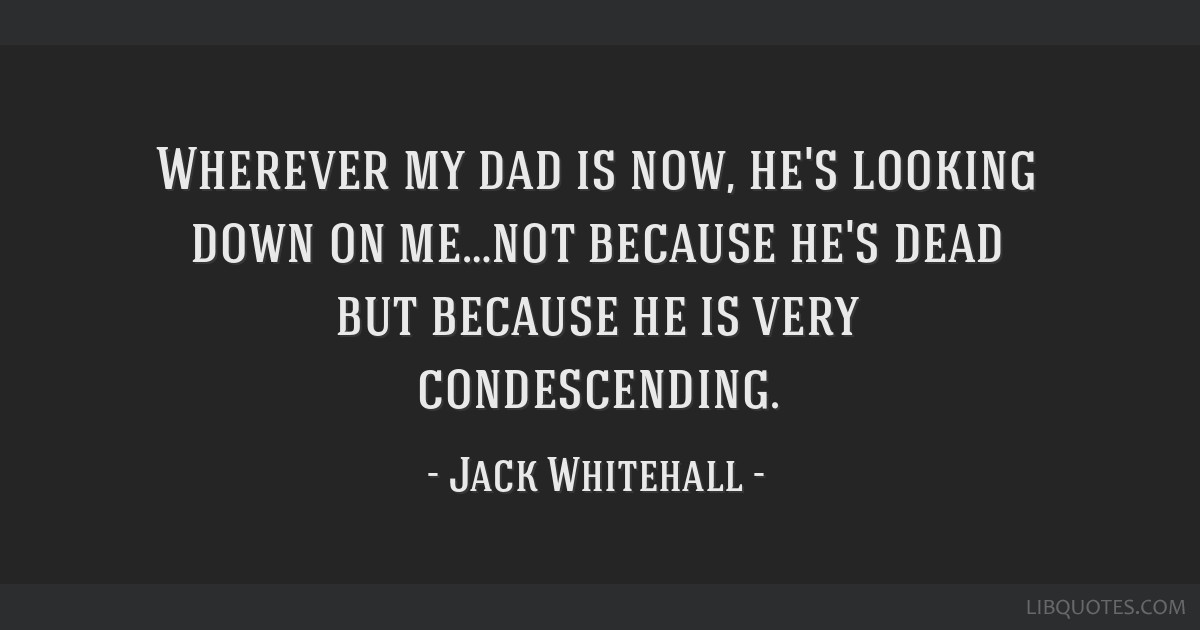
Jack Whitehall’s deadpan delivery often masks a deeper truth—especially when he says, “I’m sure wherever my dad is, he’s looking down on us. He’s not dead, just very…” It’s a line delivered with the precision of a comedian who knows how to weaponize awkwardness. But beneath the laughter lies a commentary on honesty, work culture, and the masks we wear in daily life. The quote isn’t just a punchline—it’s a mirror.
This single line, frequently shared as a “quote of the day,” distills a larger pattern in Whitehall’s comedy: the absurdity of social facades. His relationship with his father, famously documented in Travel Man and live stand-up routines, becomes a lens through which we examine how we lie to ourselves, our families, and our colleagues.
Let’s break down why this quote resonates beyond the laugh—and what it reveals about modern work, truth, and human behavior.
The Comedy of Honesty in an Age of Performance
Whitehall’s comedy thrives on uncomfortable truths. When he jokes about his father “looking down on us” while very much alive, he’s mocking the cliché we use when someone dies. But the real joke? We all know it’s fake. We use it anyway.
That’s the core of Whitehall’s genius—he exposes the scripts we follow without thinking:
- “He’s in a better place.” (Even if he hated gardening and now owns a celestial allotment.)
- “Thoughts and prayers.” (Often deployed with zero action.)
- “We’re like a family here.” (Said in toxic workplaces during layoffs.)
The humor in his quote works because it’s a correction—a factual rebuttal to emotional fluff. And in doing so, it challenges the culture of performative sincerity that dominates both personal and professional spaces.
In real life, we avoid honesty not because we’re malicious, but because we’re afraid. Afraid of awkwardness, conflict, or being seen as “difficult.” Whitehall’s comedy forces us to ask: What would happen if we stopped pretending?
Use case: Imagine a team leader admitting, “I don’t actually know how to fix this, but I’ll figure it out.” That’s honesty. It builds trust. Yet most opt for the corporate cliché: “We’re exploring synergistic solutions.”
Work Culture: The Theater of Productivity
Whitehall’s dynamic with his father—posh, repressed, emotionally evasive—mirrors the dysfunction in many modern workplaces. There’s a shared language of avoidance, where what’s said is rarely what’s meant.
Consider the parallels:
- Father (in comedy): “I’m fine, darling. Lovely weather.”
- Manager (in reality): “We’re all on the same page.” (Spoiler: No one knows the page number.)
The quote, taken seriously, becomes a metaphor for workplace dishonesty. We “look down” on problems from a safe emotional distance, refusing to engage directly. We say things are “under control” while quietly panicking. We celebrate “transparency” while hoarding information.
Whitehall’s joke reveals how we use platitudes to avoid accountability. When he says his dad is “looking down on us,” he’s not honoring him—he’s pointing out emotional detachment. The father is present but disengaged. Sound familiar?
Common mistake: Companies invest in “open door policies” but punish employees who actually walk through them with honest feedback.
Workflow tip: Replace performative language with specific, actionable communication. Instead of “Let’s circle back,” say “I need 24 hours to review this—can we reconnect Friday at 10?”
Human Nature: Why We Lie
When We Don’t Need To
The quote’s brilliance is in its timing and truth. By correcting the cliché mid-sentence, Whitehall forces the audience to confront their own complicity in social lies.
We lie because:
- We prioritize comfort over truth
- We fear disrupting harmony
- We misunderstand politeness as virtue
But these small lies accumulate. In families, they create distance. In offices, they erode trust. In culture, they breed cynicism.
Whitehall’s comedy functions as a kind of social audit. He doesn’t just tell jokes—he documents the rituals of emotional avoidance. His father isn’t dead, but he might as well be, emotionally. And that’s the real tragedy the joke highlights.
Realistic example: Two coworkers say “We should grab coffee soon!” at the end of a meeting. Neither intends to follow up. It’s not malice—it’s ritual. But over time, these empty gestures make genuine connection feel impossible.
Limitation: Radical honesty isn’t always appropriate. There’s a difference between integrity and insensitivity. The goal isn’t to blurt truths recklessly, but to replace false harmony with authentic engagement.
The Role of Humor in Speaking Hard Truths
Why does comedy work where lectures fail? Because humor disarms. When Whitehall jokes about his dad, we laugh—and in that moment of openness, we absorb the message.
Comedians like Whitehall, Ricky Gervais, and Phoebe Robinson serve as cultural truth-tellers. They say what we’re thinking but too polite (or scared) to say.
Humor creates a safe space to confront:
- Emotional repression
- Class dynamics (a recurring theme in Whitehall’s work)
- The absurdity of corporate jargon
By wrapping truth in laughter, comedians bypass our defenses. We don’t feel attacked. We feel seen.
Practical insight: Use storytelling and lightness to introduce difficult topics in meetings or difficult conversations. A well-placed, relevant joke can open doors that direct confrontation slams shut.
Honesty as a Professional Superpower
Contrary to popular belief, honesty isn’t risky—it’s reliable. Teams that communicate directly are more resilient, faster to adapt, and less prone to misalignment.
Yet many still equate honesty with bluntness or confrontation. That’s a misconception.
True honesty includes:
- Clarity without cruelty
- Accountability without blame
- Feedback that’s specific, not personal
Whitehall’s quote works because it’s factual, not harsh. “He’s not dead, just very…” isn’t an attack—it’s a correction. That’s the model for professional honesty.
Example in action: A project is delayed. Instead of saying, “We’re facing unforeseen challenges,” a leader says: “We underestimated the timeline. Here’s how we’re adjusting.” That builds credibility.
Checklist for honest communication: - Am I avoiding the real issue to keep the peace? - Would I say this differently if the person wasn’t in the room? - Am I using vague language to hide uncertainty? - Does this message invite dialogue or shut it down?
The Legacy of Emotional Repression in British Culture
Whitehall’s material doesn’t exist in a vacuum. It’s rooted in a very British tradition of emotional restraint—stiff upper lip, “keep calm and carry on,” never letting feelings interfere with decorum.
His father, Michael Whitehall, embodies this archetype: aristocratic, composed, emotionally distant. Their comedy together works because it’s both exaggerated and painfully real.
But this cultural tendency doesn’t stop at families. It leaks into work environments where:
- Feedback is indirect (“Perhaps consider…”)
- Stress is hidden (“I’m fine, just busy”)
- Conflict is avoided at all costs
The cost? Burnout, miscommunication, and innovation stifled by fear of speaking up.
Whitehall’s joke—about his living father “looking down on us”—becomes a metaphor for this emotional disconnect. We act as if people aren’t present, even when they are. We speak over them, around them, but not to them.
Cultural insight: In workplaces influenced by British norms, clarity is often mistaken for rudeness. Learning to distinguish between the two is key to modern leadership.
What We Can Learn from Whitehall’s Approach
Jack Whitehall isn’t just a comedian. He’s a behavioral analyst in a tracksuit. His work teaches us that:
- Humor reveals truth – The best jokes are rooted in observation.
- Honesty builds connection – Even awkward honesty is better than false harmony.
- Emotional avoidance has a cost – In families and teams, silence speaks volumes.
- Clichés hide reality – We use them to avoid saying what we really mean.
His quote of the day isn’t just funny. It’s a call to be more present, more truthful, and less performative.
Actionable takeaway: The next time you’re tempted to say something generic like “We’re all in this together,” pause. Ask: What do I actually mean? Then say that instead.
Embrace the Awkward, Speak the Truth
Jack Whitehall’s line—“I’m sure wherever my dad is, he’s looking down on us. He’s not dead, just very…”—is more than a viral quote. It’s a quiet rebellion against the lies we accept as normal.
In work and life, we don’t need more platitudes. We need more precision. More courage. More willingness to say, “Actually, I’m not okay,” or “I don’t know,” or “This isn’t working.”
Start small. Replace one cliché a day with a real sentence. Notice the reaction. You’ll find that honesty, even when awkward, is rarely punished—and often rewarded with deeper trust.
Let Whitehall’s comedy be your prompt: Don’t just look down on things. Lean in. Speak up. Be here—fully, honestly, and very much alive.
FAQ
What is Jack Whitehall’s quote about his dad? He jokes, “I’m sure wherever my dad is, he’s looking down on us. He’s not dead, just very…”—a humorous correction of a common cliché, highlighting emotional distance.
Why is the quote popular as a “quote of the day”? It combines humor with insight, mocking social scripts while revealing truths about family, honesty, and avoidance.
How does Jack Whitehall use comedy to address serious topics? Through exaggerated but relatable family dynamics, he exposes emotional repression, class norms, and communication failures.
What can workplaces learn from this quote? Avoid performative language. Replace vague statements with honest, specific communication to build trust and clarity.
Is Jack Whitehall’s relationship with his dad real? Yes—his father, Michael Whitehall, appears in Travel Man and other projects. Their dynamic is both comedic and authentic.
How does British culture influence the quote’s meaning? The joke taps into British emotional restraint, where people often avoid directness, even with family or colleagues.
Can humor improve workplace honesty? Yes—when used appropriately, humor can ease tension and open space for difficult conversations without defensiveness.
FAQ
What should you look for in Jack Whitehall's Quote of the Day on Life, Work, and Honesty? Focus on relevance, practical value, and how well the solution matches real user intent.
Is Jack Whitehall's Quote of the Day on Life, Work, and Honesty suitable for beginners? That depends on the workflow, but a clear step-by-step approach usually makes it easier to start.
How do you compare options around Jack Whitehall's Quote of the Day on Life, Work, and Honesty? Compare features, trust signals, limitations, pricing, and ease of implementation.
What mistakes should you avoid? Avoid generic choices, weak validation, and decisions based only on marketing claims.
What is the next best step? Shortlist the most relevant options, validate them quickly, and refine from real-world results.